
I hear a version of this constantly. A client who used to genuinely like their job, sometimes even loved it, and now just feels dread. Not dramatic, blow-up dread. The quieter kind. The Sunday Scaries that somehow start on Saturday. Waking up at 3am running through everything you forgot to do. Replaying an argument with your boss that you'll probably never actually have out loud.
Somewhere in there, the quitting fantasy shows up. Maybe it's subtle, a few extra minutes browsing job boards. Maybe it's the full Jerry Maguire version, grabbing your stuff and walking out mid-meeting. And then reality sets back in. You used to like this job. You need the paycheck. And if you're honest, you're not even sure where you'd go instead.
Here's what I tell clients in this exact spot: you might not need a new job. You might just need a new approach to the one you already have.
I've absolutely worked with people who ended up leaving. But I've also worked with a teacher who dreamed of quitting and ended up having his best year of teaching yet. An accountant who used to fantasize about running off to work in a library, and realized that by making more room for the things she loved outside of work, she could actually be happy where she already was. A medical director who built better boundaries around work so she could enjoy her life outside of it, which, it turns out, made her enjoy the job itself more too. If you're stuck in the "I hate this job but I can't leave" loop, here are ten things worth trying before you do anything drastic.
1. Reset Your Priorities
Start here. What actually matters to you?
Look honestly at where your time and energy are going right now. If you'd say your health, your family, and your sanity are priorities, but your calendar tells a completely different story, that gap is worth paying attention to.
Make a list. Rank what actually matters most: mental health, physical health, financial stability, relationships, hobbies, spiritual connection, work. Then ask yourself honestly, am I actually living in line with this list? If the answer is no, that's your first shift.
2. Redefine How You See Yourself
Be honest with yourself for a second. Is your self-worth tied to your productivity? Your salary? A gold star from your boss?
If I asked you to list five things about yourself, would your job title be one of the first things you'd say?
A lot of us were taught, directly or indirectly, that our value is tied to our output. That we're lovable when we're successful. That we're enough once we've achieved something. But what if your worth had nothing to do with work at all?
Try on a different script. I'm proud of myself even when I rest. I'm still worthy on the days I don't check off every task. I bring value just by being me, not by what I produce. When that actually sinks in, work loses its grip on you in the best possible way.

3. Rebuild Your Personal Life
One of the most common things I hear from clients is some version of "I just want to feel like myself again."
Somewhere along the way, they stopped doing the things that made them feel alive. Hobbies. Friendships. Date nights. Movement. Without really noticing it happening, their entire identity became their job.
If you want work to feel smaller, your life needs to feel bigger. Join the run club. Book the weekend trip. Take the pottery class. Say yes to joy again, even if it's only for fifteen minutes and even if you're exhausted. You don't need to wait until you "have time." You make time, for yourself, on purpose.
4. Say What You're Not Saying
A lot of resentment at work comes down to one thing: not speaking up.
You're overloaded, underappreciated, and stuck doing things that don't light you up. But have you actually said anything about it?
Most of my clients are afraid of being seen as difficult, or getting in trouble, or just being told no. But here's what tends to happen once they start using their voice anyway: roles get restructured, support gets hired, burnout starts to lift. The harder truth is that some of your frustration might actually be with yourself, for staying quiet for so long. Speak up, clearly and with confidence, and you reclaim a lot of your own peace in the process.
5. Say No, and Mean It
You knew this one was coming. Saying no is one of the most reliable paths to freedom you have.
No to the extra project nobody's paying you more for. No to being the only person who always picks up the slack. No to saying yes just because you always have.
I've watched clients learn to say no strategically and without over-explaining themselves, and the result is almost always the same: hundreds of hours reclaimed, more energy, less resentment, more actual joy.

6. Delegate Like You Mean It
"I don't have time to delegate." "My team's already maxed out." "It's just easier if I do it myself."
Sound familiar? These are the exact excuses that keep people stuck.
Delegating isn't about being lazy. It's a leadership skill, and a hard one, because it requires letting go of control and actually trusting other people. It might cost you more time upfront. In the long run, it buys back your energy, your creativity, and your sanity, all of which are worth a lot more than the few minutes you saved doing it yourself.
7. Set Boundaries, Especially With Yourself
You've probably heard plenty about setting boundaries with your boss. But what about the boundaries you break with yourself constantly?
Silencing notifications after hours. Not checking email in bed. Actually logging off on time. Not working "just a little" on Sundays.
Here's the truth most people don't want to hear: a lot of the pressure you're under is self-inflicted. You're holding yourself to standards your boss never actually set. I've helped clients break the compulsive email-checking habit, kill the "just one more thing" loop, and finally feel like their evenings genuinely belong to them again.
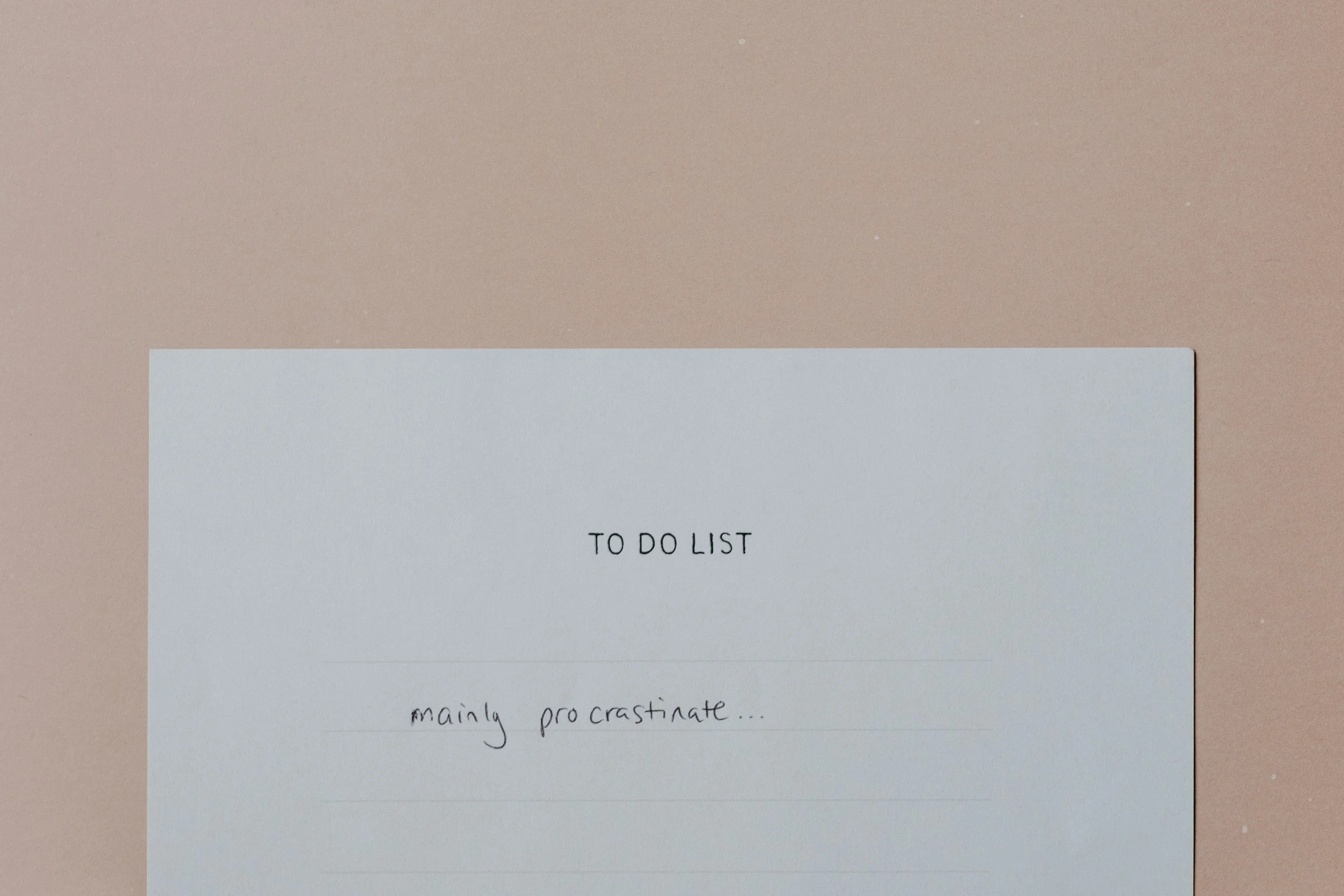
8. Work Through Your Procrastination
You're not lazy. You're stuck, and those are two very different problems.
Procrastination is usually a cover for something underneath it: fear of doing it wrong, uncertainty about where to even start, overwhelm, ADHD, imposter syndrome. It's rarely about willpower.
It's not about forcing yourself to just do it. It's about getting curious about why you're avoiding it in the first place, and building real tools to work through that. I've seen clients stop beating themselves up over this and everything shifts. One client who used to wake up every night at 3am in a panic sleeps soundly now, better than she had in years.
9. Redirect Your Thoughts
You're home. You're technically off the clock. But your brain is still running through emails, to-do lists, and conversations that haven't even happened yet.
Your brain has learned to default to work mode, and the good news is that it can unlearn that too. With enough repetition and intention, you can genuinely rewire how present you are outside of work. It takes practice, but it's absolutely possible, and the payoff is more peace, more presence, and more capacity for the things that actually matter to you.
10. Don't Take Work So Seriously
I say this with love: you're not as irreplaceable as it feels right now.
If something happened to you tomorrow, your company would figure it out. They'd find someone else. The work would keep moving. That's not a dig at you, it's just how companies function.
So ask yourself honestly why you're sacrificing your health, your joy, and your family for an organization that would replace you without much hesitation. You are infinitely more important to the people who actually love you than you are to a company. Treat your time and energy like that's true, because it is.
You're Not the Problem, But You Are the Answer
I'm not here to shame you for overworking, overgiving, or feeling stuck. I've been there myself. So have most of my clients.
What I want you to actually hear is this: you're not broken. You're not lazy. You're not asking for too much. You're burnt out, you're carrying more than your share, and you've probably been operating off some outdated script about what success is supposed to look like.
You're allowed to write a new one.
If you're ready to stop fantasizing about quitting and actually start feeling better at work, book a free exploration call. We'll talk through what's really keeping you stuck and how to make work, and your life, feel genuinely better.
You don't have to stay on the edge of burnout. You don't have to keep white-knuckling your way through it. You can feel like yourself again.
